
Welcome!
I am a 21-cm cosmologist and Assistant Research Professor in the Cavendish Astrophysics Group at the University of Cambridge.
My research focuses on three pivotal epochs that shaped the first billion years of cosmic history:
- the Dark Ages, a period beginning roughly 370,000 years after the Big Bang, once the Universe had cooled enough for atoms to form but before the first stars appeared,
- the Cosmic Dawn, when the first stars and protogalaxies ignited and began ionizing their surroundings, and
- the Epoch of Reionization, during which these early sources became prevalent enough to transform the hydrogen intergalactic medium (IGM) from a cold, neutral gas into a hot, ionized plasma.
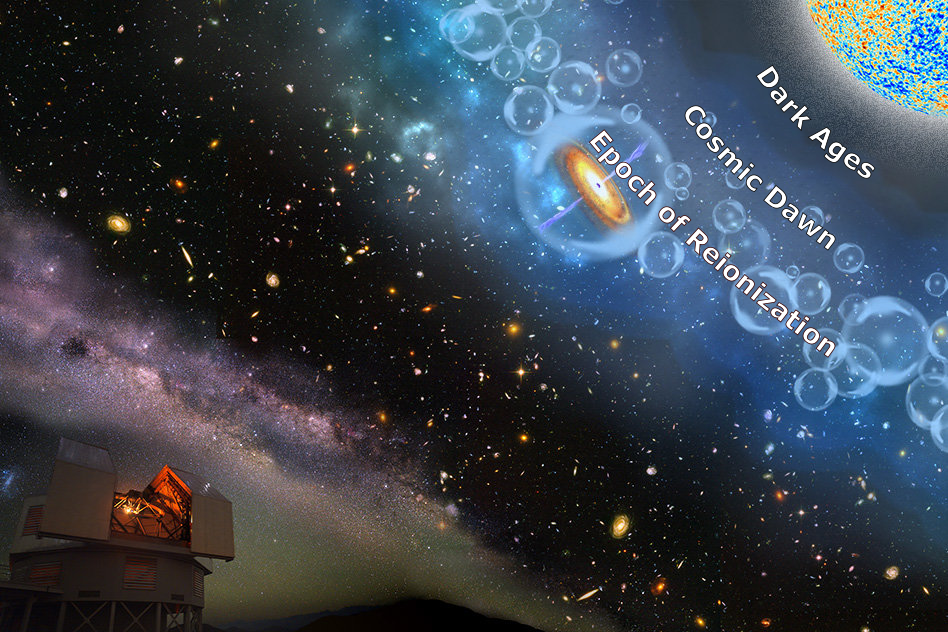
Schematic representation of our view into cosmic history. Observing with a telescope (bottom left) allows us to gain information about the early history of our Universe, including: the Dark Ages, Cosmic Dawn and Epoch of Reionization that followed the Big Bang (top right).
Image credit: Adapted from image by Carnegie Institution for Science
See the Overview below for more on these epochs in the context of cosmological structure formation.
I develop and apply machine-learning-accelerated Bayesian inference techniques to make precision measurements of redshifted 21-cm emission from the neutral hydrogen that pervaded the Universe during these epochs. My goal is to extract as much information as possible from this faint, yet powerful signal.
This work sits at an exciting intersection of cosmology, astrophysics, statistics, and machine learning, and includes research at the forefront of:
- 21-cm cosmology,
- precision radio astronomy,
- Bayesian statistical inference, and
- astronomical machine learning.
A current focus of my research is on how to optimally extract astrophysical and cosmological information through joint analysis of high-redshift probes — including sky-averaged and fluctuating 21-cm emission, high-redshift quasar spectra, galaxy statistics, and measurements of the Cosmic Microwave Background.
Additionally, I lead a UK Square Kilometre Array (SKA) Regional Centre team targetting science validation and tooling for the SKA observatory (SKAO). SKAO is building the two largest telescope arrays in the world, located in South Africa and Australia. In the quest to achieve the SKAO’s (highest priority) science objectives, ensuring the robustness of our models is paramount. The need for precise simulations and validated data models to interpret the data has never been more critical. Model validation is the process of evaluating a model’s performance and ensuring that it accurately represents the underlying phenomena it aims to predict.
This can be broken down into two components:
- ensuring that calibration and preprocessing of the data minimises systematic errors that limit science recovery, and
- ensuring that one has a sufficiently accurate model of the data for reliable recovery of a signal of interest.
Our team is working to develop precision simulations and a comprehensive Bayesian model validation toolkit to empower UKSRC in supporting scientists, ensuring that modelling accuracy meets the requirements for precision astrophysics with SKA and precursor data.
Between 2017 and 2025, I held research scientist and fellowship positions at several North American institutions, including: a research scientist position in the Low Frequency Cosmology Lab at Arizona State University (USA), an MSI postdoctoral fellowship at McGill University (Canada), and a research associate position at Brown University (USA). Before that, I was a graduate student at the University of Cambridge in the UK.
Overview
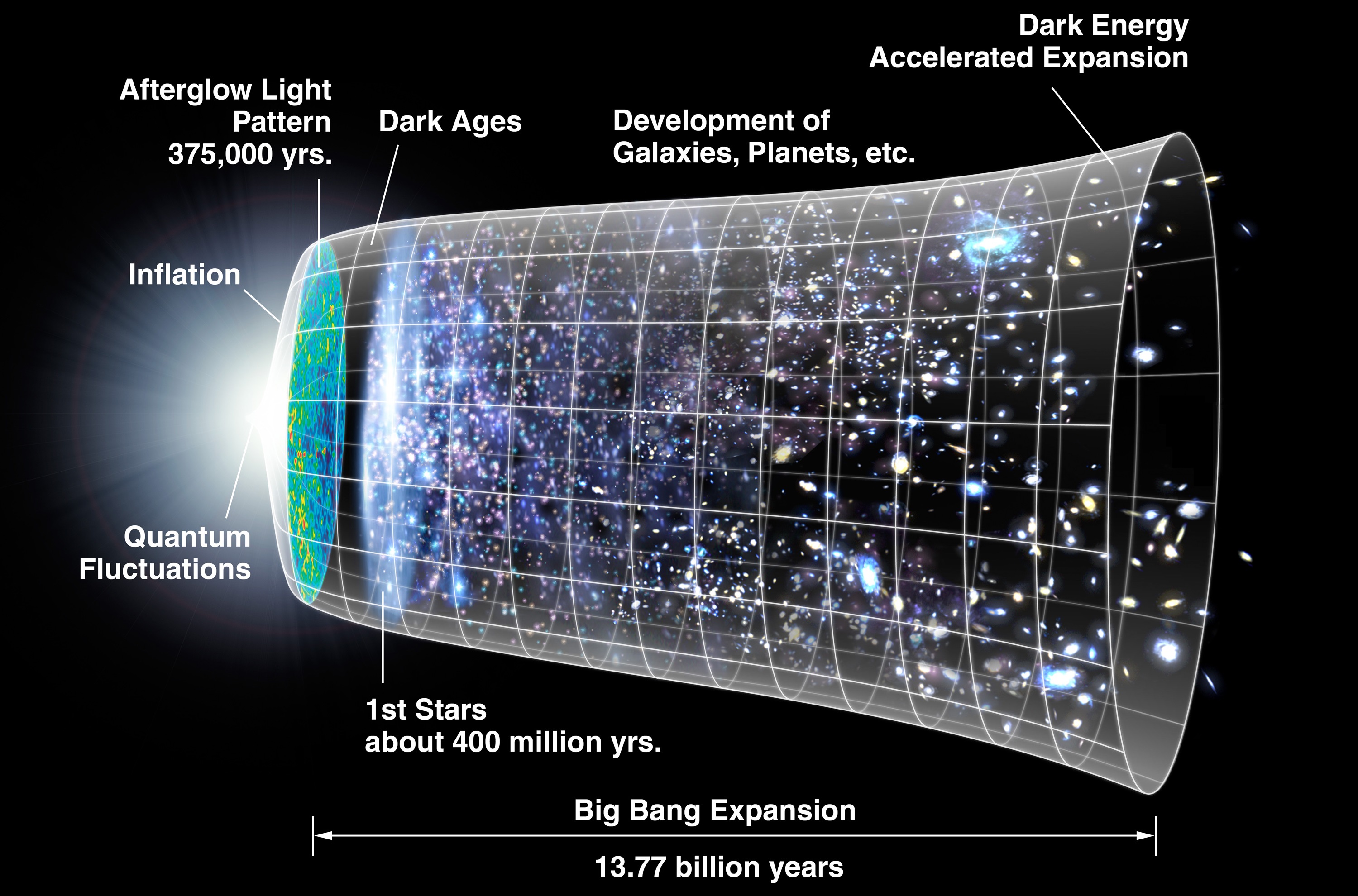
Timeline showing a Big Bang model for the origin and evolution of the Universe.
Image credit: NASA/WMAP Science Team
Cosmology is the study of the Universe as a whole: its origin, large-scale structure and dynamics, ultimate fate, and the fundamental physical laws that govern its evolution. Over the past ~60 years, a wide range of observational probes have gradually revealed how the Universe came to look the way it does today. The Cosmic Microwave Background (CMB) provides a remarkably pristine snapshot of the primordial fluctuations that later evolved into galaxies and large-scale structure. Meanwhile, the late-time Universe has been mapped through galaxy surveys and multiwavelength observations of galaxy clusters.
However, the period between these two well-observed regimes — from roughly 370,000 to 1 billion years after the Big Bang — remains less well explored.
At its bookends, we know the baryonic material in the Universe during this era began as a sea of cooling neutral gas during the Cosmic Dark Ages and ended as a rich population of galaxies embedded in an ionized intergalactic medium (IGM), similar to what we see today. Theoretical models predict that during the intervening time, the first stars and galaxies formed in a period known as the Cosmic Dawn. These early sources heated their surroundings and created expanding bubbles of ionized hydrogen. As these bubbles grew and merged, they triggered a global phase transition in the IGM known as the Epoch of Reionization.
Despite significant progress, many of the key details of Cosmic Dawn and reionization remain elusive. Foundational questions about early galaxy formation and structure growth remain open: What is the minimum dark matter halo mass capable of forming stars? When did the first population III stars form? How did they shape their environments and influence later generations of galaxies?
Observations of this period represent the frontier of cosmic structure formation studies. While the CMB provides broad constraints on the timing and duration of reionization, and powerful facilities like the Hubble Space Telescope, James Webb Space Telescope and Atacama Large Millimeter/submillimeter Array are pushing the boundaries of high-redshift galaxy detection, these approaches face key limitations. They primarily probe the sources of ionizing photons and their local environments, rather than the IGM itself. They also struggle to access the earliest stages of reionization and the contribution of the faintest sources.
A complementary probe capable of addressing these challenges is the 21-cm hyperfine line radiation emitted by neutral hydrogen. This signal directly traces the IGM and provides a window into its temperature, ionization state, and large-scale structure, as well as the imprint of both rare, bright galaxies and the numerous faint ones that are otherwise inaccessible. I am a member of four flagship radio astronomy experiments working to detect this emission (see Experiments).
Ultimately, bringing together all of these cosmological probes of the high-redshift Universe within a unified statistical framework will provide the most complete picture of this critical period in cosmic history. Developing such joint analyses, built on Bayesian inference, powered by machine learning, and grounded in state-of-the-art astrophysical and cosmological simulations, is a core focus of my research (see e.g. Sims et al. 2025 for some of our exciting, recent results).
Experiments
I am a member of the EDGES, HERA, REACH and SKA experiments attempting to detect the faint 21-cm signal emitted by the neutral hydrogen that pervaded the early Universe over a period spanning the Dark Ages following recombination, the Cosmic Dawn when the first stars, proto-galaxies, and black holes formed and the Epoch of Reionization when the neutral hydrogen in the intergalactic medium was eventually burned away. For more insights and findings related to my research, see my Publications page.
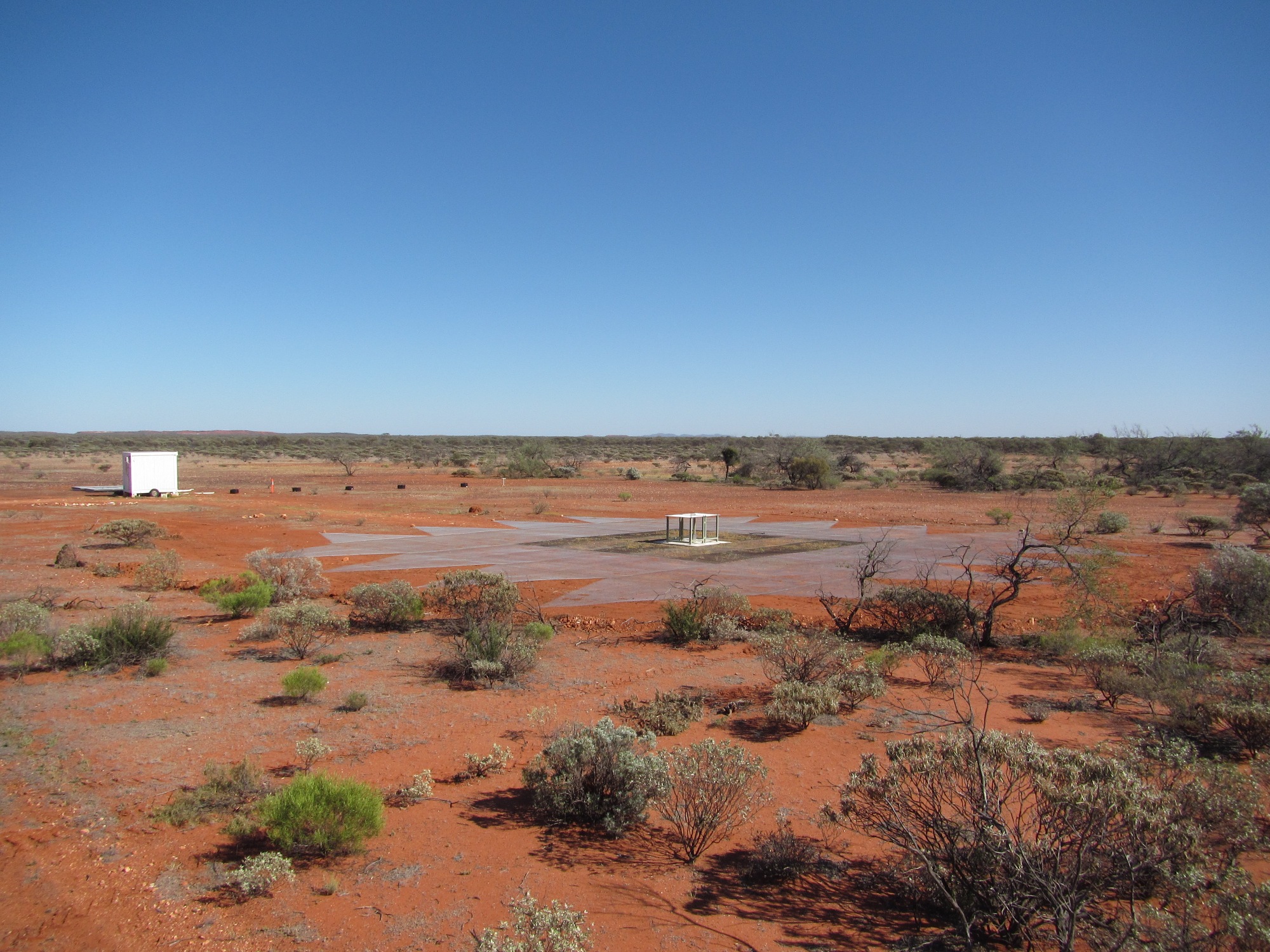
EDGES: Experiment to Detect the Global EoR Signature
Photo credit: EDGES collaboration
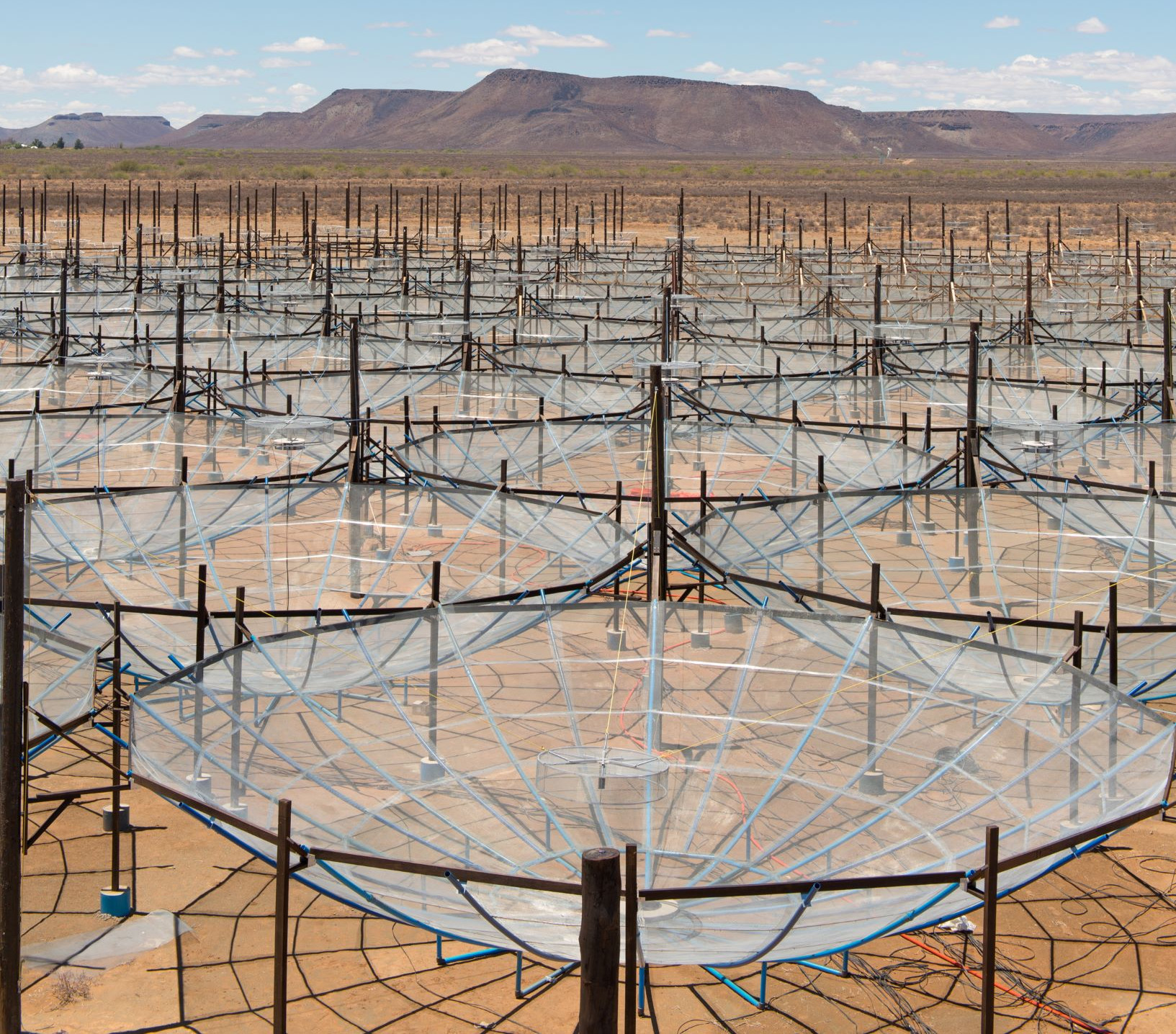
HERA: Hydrogen Epoch of Reionization Array
Photo credit: SARAO
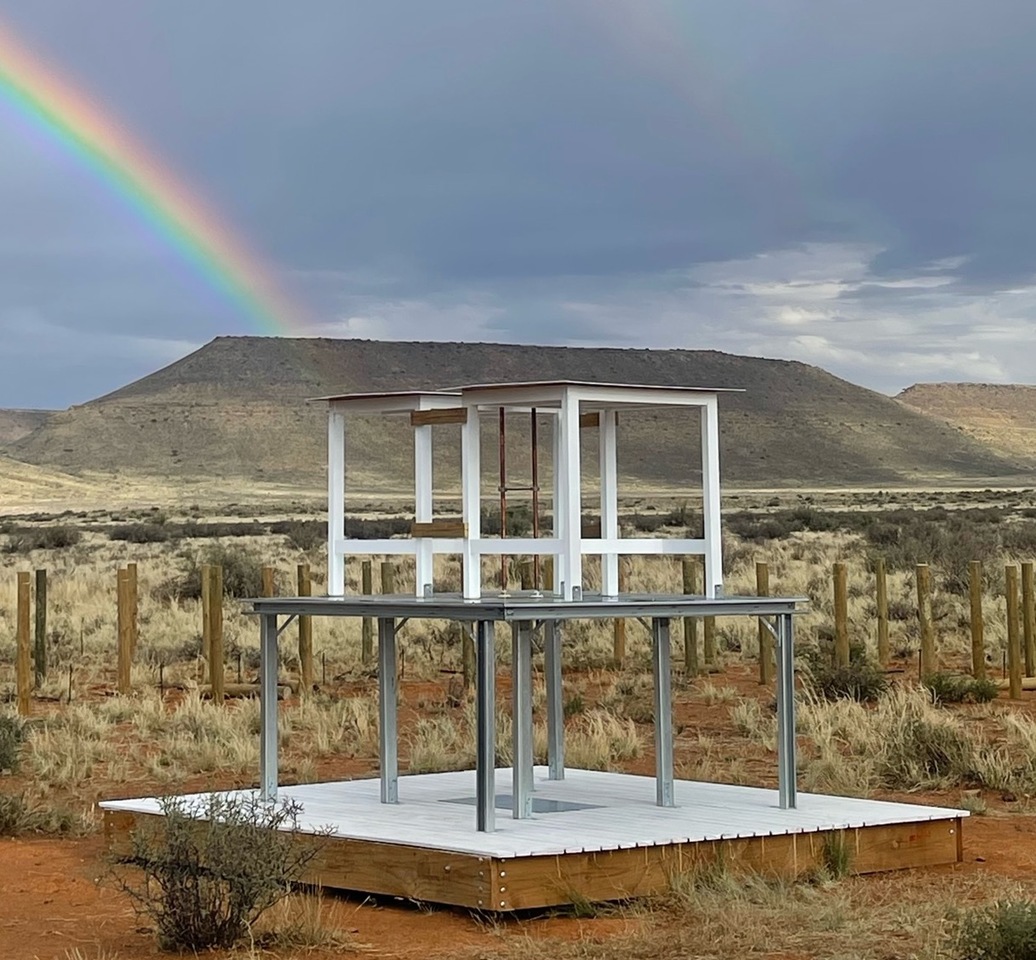
REACH: Radio Experiment for the Analysis of Cosmic Hydrogen
Photo credit: REACH collaboration
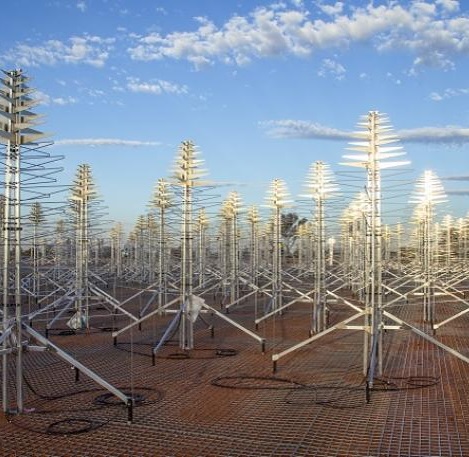
SKA: Square Kilometre Array
Photo credit: ICRAR